
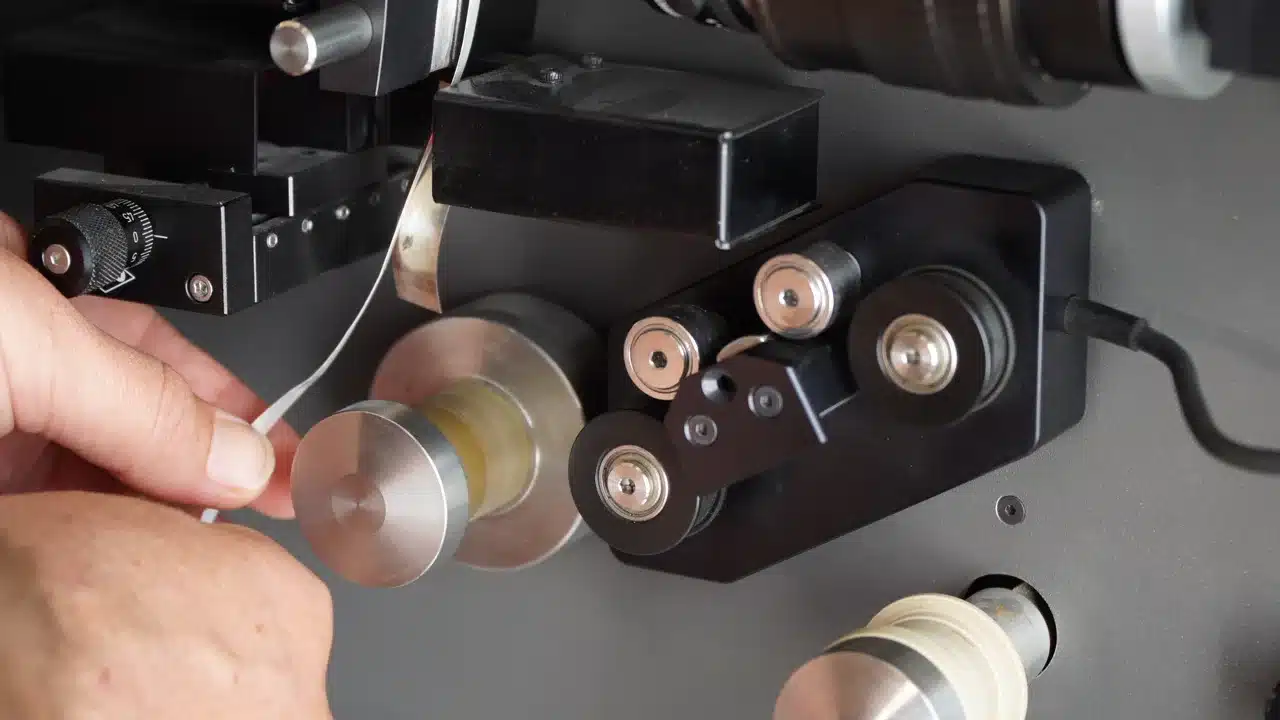
The short answer: do not play anything, do not clean anything, and do not throw anything away. Take the box out of the loft, the storeroom or the balcony and bring it inside the flat — into a climate-controlled room, on a shelf rather than the floor. Open it, photograph what is there, and immediately separate anything with a sharp vinegary smell or visible mould from the rest of the pile. Then prioritise by what cannot be filmed again. The clock on this material has been running for years; a day or two of getting organised changes nothing, but one careless playback does.
We see this moment almost every week, and it usually arrives at the least convenient time: clearing a flat, moving house, or sorting through things after a bereavement. Somebody opens a cupboard and finds a whole box of reels, cassettes and albums — and the entire filmed history of a family is suddenly sitting on the living-room table without instructions. This guide is the order of operations we would give you on that phone call.
What do you do in the first hour?
Four things, all of them deliberately passive:
- Get it out of the bad place. The loft, the storeroom and the balcony are the three standing enemies in the Israeli climate — heat, humidity and swings between them. Simply moving the box into an ordinary room inside the flat halts the fastest deterioration.
- Do not open a reel and do not pull tape by hand. There is nothing you learn from unspooling something by hand that you would not learn from a photograph.
- Separate the suspects. Anything with a sharp vinegary smell, a musty smell, whitish or powdery patches, or softened cardboard comes out of the pile into a separate bag or box. Isolation matters: some of these conditions spread to neighbours inside a closed box.
- Take photographs. One picture of the open box and one or two of individual items are usually enough for us to tell you what you have and what is urgent.
What must you not do, however tempting?
This list is short, and it is based on what reaches us after somebody has already tried:
- Do not play and do not project. The most dangerous moment in the life of a tape or reel stored for decades is that first pass. An old projector or a domestic VCR that has also been idle for a decade can stretch, tear or bind the material — and film that has shrunk over the years should not go through a projector at all.
- Do not clean with alcohol, wipes or a cloth. Improper cleaning removes the layer that holds the image. It cannot be undone.
- Do not use a hairdryer and do not put anything in the sun. Applied heat is the fastest route to permanent distortion.
- Do not freeze it. A domestic freezer causes water to condense on the carrier and puts the layers through contraction and expansion cycles.
- Do not throw anything away before somebody has looked. Items that look completely ruined can often be saved, and items that look perfectly fine are sometimes the urgent ones.
In what order should you rescue things?
If the box is large, do not try to deal with everything at once. This is the order we recommend:
| Priority | What belongs in it | Why now |
|---|---|---|
| 1 — immediate | Anything with a vinegary smell, visible mould, staining or physical distortion | These are advanced, spreading conditions, and the only ones that keep getting worse even after you have brought the box indoors |
| 2 — high | Home movie film and audio reels, especially one-offs with no copy | They exist nowhere else, and the equipment that plays them is steadily disappearing |
| 3 — medium | Home video cassettes of family events | Magnetic media ages steadily; not in immediate danger, but not young either |
| 4 — can wait | Recorded broadcasts, commercial films, duplicate copies | This content can usually be obtained elsewhere — it is not unique to the family |
How do you find out what is even in the box?
Most boxes hold a mixture: VHS from the living room, small camcorder cassettes, home movie reels, and sometimes audio tape reels that look like film at first glance. If you are not sure what you are holding, we have a full identification guide by size and shape, and the site also has a formats and media page.
For items already showing distress there are dedicated guides: mould on tapes, vinegar syndrome, torn or broken 8mm film, and a tape stuck in the VCR.
And what about the feelings wrapped around it?
It is worth saying out loud: this box almost never arrives on a happy day. Many of our clients open it after a death, and they do not always know whether they want to see what is inside. It is fine to take it slowly. What is not advisable is putting the box back in the loft "until there is energy for it", because up there the clock keeps running fast. Moving it indoors and having a short conversation with us commits you to nothing, and it buys time.
Once the material has become files, our standing recommendation is 3-2-1: three copies, on two kinds of media, with one copy kept outside the house. A single external drive sitting in the same cupboard as the original box is not a backup.
Found a box and no idea where to start? Send a photograph — we will tell you honestly what is urgent and what can wait.
We send couriers to your door anywhere in Israel, in both directions, so the box only has to be moved once. Small jobs are usually ready within about seven business days and larger ones within about 21 business days, and the first minute is on us. You can also hand items over in person: the studio at HaMa'ayan 9 in Rishon LeZion, Lissin 5 in Tel Aviv, or Mitzpe Hararit in the Galilee. Call 03-5610368 or leave your details on our contact page. What each service includes is set out on our price list page.
Frequently asked questions
I found a whole box and have no idea what is inside. Will you go through it for me?
Yes, and it is work we do almost every week. You do not need to sort, label or understand what is in the box — just send it as it is. We identify each item, report what was found, and flag what is urgent. If you would like a sense of it before sending anything, a photograph of the open box is usually enough for us to give a first assessment.
Some of the items smell. Is that a danger to the rest of the box?
Yes, which is why separating them is the first thing we ask for. A sharp vinegary smell and a musty smell both indicate processes that can pass to neighbouring items inside the same closed box. Move the suspects into a separate bag or box, do not try to clean them, and do not leave them in the same container as the healthy items.
I only want to know what is recorded before I commit. Is that possible?
It is, and without playing anything at home: the first minute is on us. We scan one minute of the material with no obligation, you see exactly how it came out and at what quality, and only then do you decide whether to continue. That is the safe way to answer the question "what is on these" — instead of running an old tape through a VCR and risking it.
How long do I have? Can this wait a year?
It depends what is in the box. Items with a vinegary smell, mould or physical distortion will not sit unchanged for a year, and they are worth handling now. Items that look sound and have been stored indoors can wait, but they do not improve with time — and above all, the equipment that plays the old formats is steadily disappearing. If you do postpone, at least store the box properly inside the flat rather than in the loft.


